Tag Archives: Belgium

Eclectique: Meeting Elisabeth Lefebvre

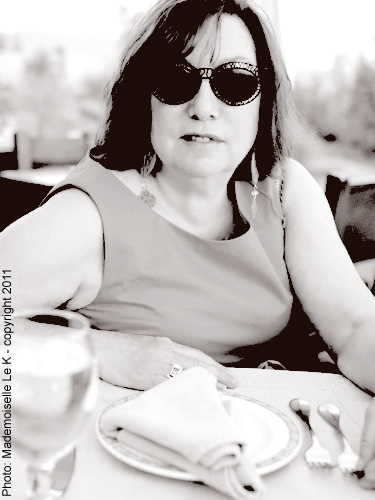
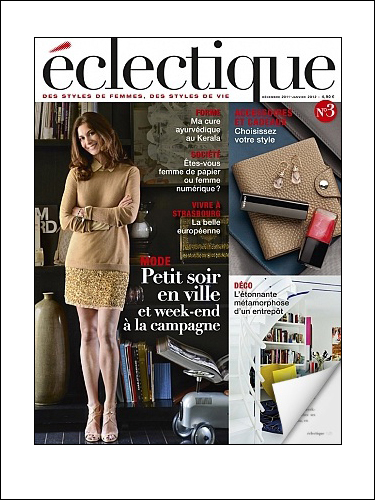
– Press provides women with stupid things only! says Elisabeth Lefebvre, the editorial director of the new French women’s magazine, Eclectique. Today, the third issue is on newsstands.

– I receive messages of readers saying “At last: a magazine without celebs!”. Eclectique is for women  with a higher level of education. And women who are accustomed to read the financial press and the women’s press. To every curious girls who need aestheticism and clever content. It’s a paper that respects its readers, “the latest trends far from diktats”. With Anne Lefèvre, my accomplice for many years, we’ve wondered : what can we offer?
 

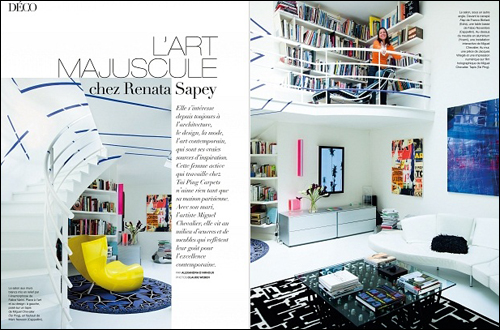
For 30 years, Elisabeth’s created about fifteen magazines, most of them became  really famous, like Côté Sud, Côté Ouest, Côté Est. She’s always kept the same principle : “never doing the same thing than the others. I am a free electron“. Young mother, she launches “Enfants Magazine still existing today“. In 1980, Elisabeth is an active woman and she doesn’t find a magazine that represents the active women like her. So she creates : “Biba, the first magazine of women working and enjoying it!“. In the 90’s, when she has her house built in the South of France, she releases Côté Sud (one of the best lifestyle and decoration magazines around the world!) : “Thanks to Côté Sud, I’ve discovered a lot about the South I didn’t know before“. And she launches Côté Ouest in 94, and Côté Est, in 99. Then Atmosphère, “the first
women’s magazine of the art of living“. She sells all of her magazines and creates in 2007, JV for the French who live in Belgium and the Belgian who like France. The list is impressive! 

It is with deep humility Elisabeth answers :

– I feel more like a potential reader than a journalist. I do love my job. A job of curiosity that allows to defend my own values :  roots, authenticity, curiosity and travels. In life, we are eclectic. And even more so when we travel. I like everything and I’m not only “luxury” or “adventure”.
Elisabeth and Anne have questioned the evolution of society : 

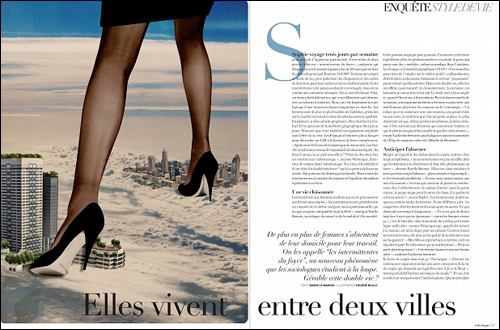
– The big change is the globalisation. Today women are turning to overseas, they are more European than Franco-French. We see a big desire to leave Paris, due to the cost of property and the quality of life and the cultural life’s rebirth of  provincial towns. The crisis has trivialized Tanguy’s phenomenon, family is a a crossroads of generations helping each other in a network. There is a total lack of the 50 years old women’s representation in the press. 

Eclectique is transgenerational. In each issue, we discover the portrait of a woman who is “a model of intelligence and sensitivity“. In the issue out today, the Eclectique Woman is Patricia Tartour, a pioneer of travels in China and the founder of Maison de la Chine (a travel agency).
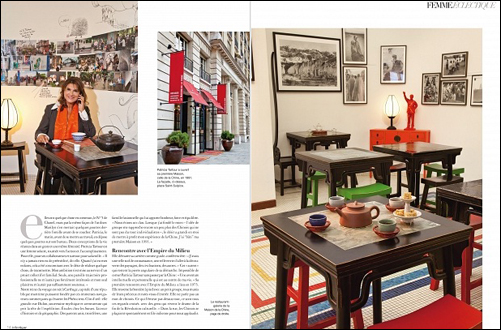
– We want to show exclusive subjects. For exemple for travel topics, I like the relationship between travel and literature. I also look for aesthetim in photos. Eclectique is a small refine magazine, a niche magazine like Côté Sud, trying to accomodate its readers. A lifestyle women’s magazine.

Many thanks Elisabeth! Today, the Eclectique third issue is on newsstands in France, Belgium and Switzerland.

Related posts : INTERVIEWS & DESTINATIONS
Customisez Moi, The Finale (Part 1)

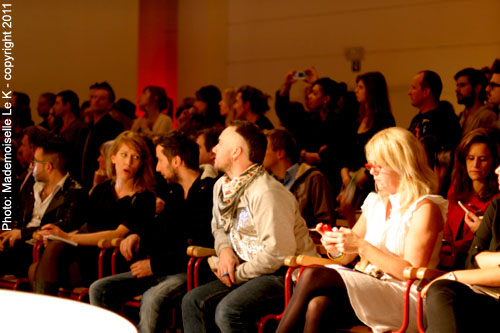
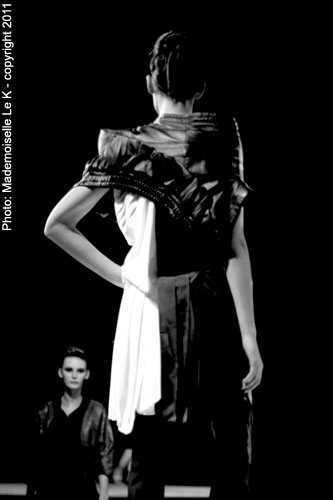
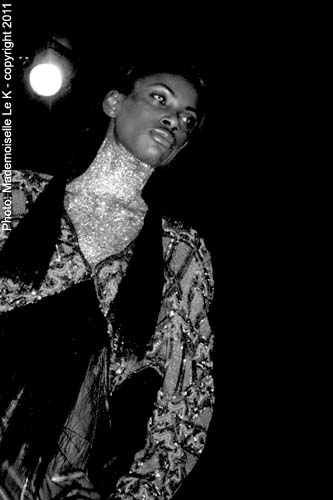
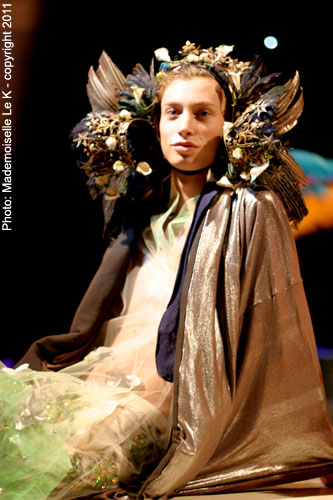
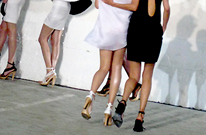
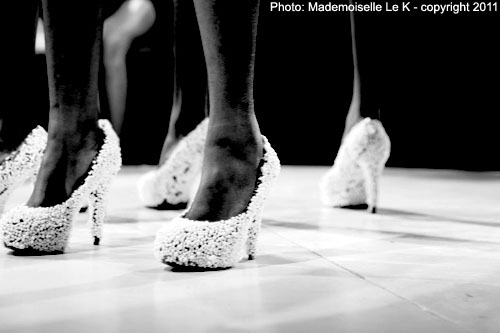
Remember : Customisez Moi, the finale was last 11/11/11 (and the cosmos left us alone!). Oh you were not there : too bad for you! Here some excerpts  of a party so fa-fa-fa-fashion! Picture below, some members of the jury : the designers Johnny Coca (Céline), Anthony Vaccarello and Jean-Paul Lespagnard. The other members were : Benoît Béthume, Veerle Windels (De Standaard), Anne-Françoise Moyson (Le Vif), Julie Huon (Le Soir), Romain Brau (RA), Elke Lahousse (Knack), Marie Hocepied (La Libre Essentielle), Béa Ercolini (ELLE Belgique) and Didier Vervaeren (Modo Brussels). The shows of the finalists – Arnaud-Yves Dardis, Céline Lellouche, Dorothée Fontignie, Eva Di Caro, Melissa De Guglielmo, Muriel Delvigne, Ophélie Weynants & Co, Pieter Wyseur, Pierre Dussart (picture 4), Reda Faklani and Sophie Seyli  (photo 3) – were punctuated by different performances (Romain Brau’s performance on the last picture).

To be continued…

Related posts :

Customisez Moi, The Finale (Part 2)

TRENDS & DESTINATIONS


Fantastic Meeting with Rem Koolhaas @ Taschen

Last tuesday @ Taschen Bruxelles : 

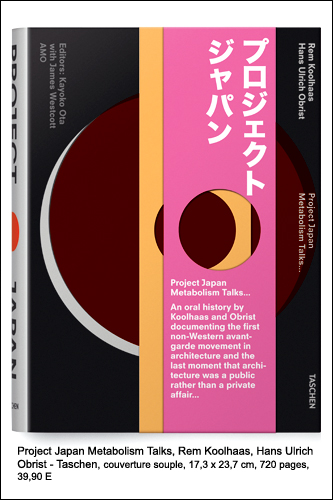
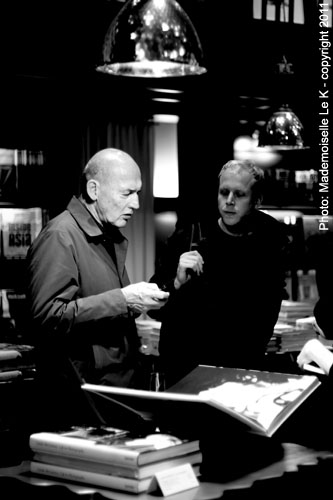
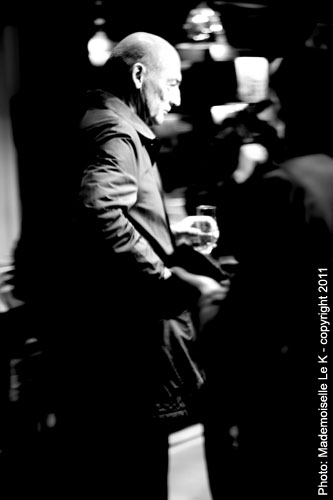
Rem Koolhaas was signing copies of “Project Japan, Metabolism Talks…” written with Hans Ulrich Obrist (between 2005 and 2011) and edited by Kayoko Ota. The Dutch famous architecte who’s won several international awards including the Pritzker Architecture Prize in 2000, came with James Westcott. He contributes to the book as a writer (picture 5) and will participate to this improbable interview!

Among many emblematic works of Rem Koolhaas, the headquaters of CCTV in Beijing and Casa da Musica in Porto, which is my favourite!  A crazy shaped building with perspectives of German Expressionnist movies : “with a low floor space and less impact on the environment” (Rem Koolhaas). I really enjoyed discovering each spaces, going from one surprise to the next. Like a succession of decors both playful, aesthetical, convenient and unconventional.

No surprise : Rem Koolhaas studied scriptwriting before studying architecture. He wrote an unproduced script for Russ Meyer, the filmmaker of “Faster Pussycat Kill Kill” (the master of  B- movies is today a cult director)! In 1975, Rem Koolhaas founded OMA together with Elia and Zoe Zenghelis and Madelon Vriesendorp. Then he had a student called Zaha Hadid… Quiet on the set!

– Why a book about the Japanese architecture?

Rem Koolhaas answers in French :

Today there is no more Dutch, or French or American architecture. Except in Japan, there’s always been a Japanese architecture. It is the last nation with an influent architecture. The Japanese architects have a more sophisticated link to the past. Which is both a weight and a gift.

– What is the Japanese movement Metabolism?

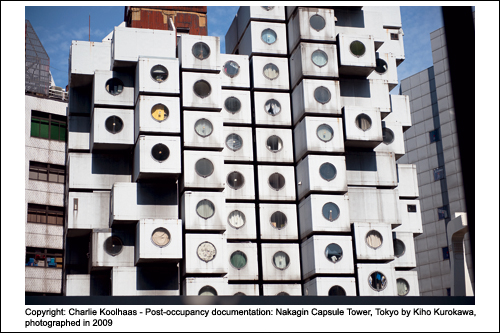
–  For Metabolism, the architecture is a phenomenon almost organic, constantly changing. In 1960, there was an optimism about the role of technology. Those architects created an architectural vocabulary. In the book, the interviews review all context of this Japanese architectural movement and the role of the Japanese  bureaucracy at the launch of this movement. It’s really a human book. We interviewed the surviving members of Metabolism, together with their mentors, collaborators, rivals, critics, protégés,  the architects widows and families.

– Is the book a task of remembrance?

– Yes, it’s about transmission. It is a cultural document representing a moment before the market be the dominent force.

Rem Koolhaas shows me the book spine, with a multicoloured stripe design. Each one of these colours corresponds to one complete section of the book. Really helpful – I was about to write “to navigate”! lol!

– Today  architect has to be more than an architect?

– Architect has always had to be more than architect. Architect-businessman, or architecte-sociologist, or architect-writer…

MANY THANKS TO Rem Koolhaas, James Westcott and Taschen.

Related posts :  


INTERVIEWS